
BICHONES HABANEROS. EXCELENCIA EN PUREZA DE RAZA.
Datos personales

- Pilar Santos y Luis Alberto Prado
- luisalberto.prado@stellantis.com ; (0034) 669492604 ; (0034) 639700387 ;
miércoles, 10 de noviembre de 2021
TENEMOS 3 CACHORROS DISPONIBLES NACIDOS EL 6 DE OCTUBRE 2021.
3 MACHOS DE COLOR ROJO, MUY LINDOS.
PADRE Y MADRE CAMPEONES DE BELLEZA EN ESPAÑA, PORTUGAL E IBÉRICOS.
AMBOS SON "SUPER CAMPEONES DE BELLEZA".
Un carécter extordinrio.
12 Pruebas de herencia realizadas.
Entregan con Pasaporte, registros, documento de pureza de raza,
microchip, vacunación a la edad.
669492604 para más información (con whassat).


lunes, 9 de noviembre de 2020


lunes, 19 de octubre de 2020


viernes, 17 de febrero de 2017
MEJOR PERO DEL AÑO 2016 EN GALICIA
AMAZING DANCE - BICHON HABANANERO
Estamos orgullosos de presentarles a nuestra linda habanera AMAZING DANCE SHISUKA.
Ella ha conseguido el título de MEJOR PERRO DEL AÑO 2016 EN GALICIA, es una alegría inmensa por la dificultad que esto tiene para está raza poco conocida en España y por competir con todas las razas de perros.
Sus títulos son:
CAMPEONA JOVEN ESPAÑA.
CAMPEONA JOVEN PORTUGAL.
CAMPEONA JOVEN IBÉRICA.
WINNER JOVEN MEDITERRANEO.
WINNER JOVEN PORTO (PORTUGAL).
CAMPEONA DE PORTUGAL.
CAMPEONA DE ESPAÑA.
CAMPEONA DE GIBRALTAR.
CAMPEONA IBÉRICA.
WINNER PORTO.
CAMPEONA GALLEGA.
MEJOR PERRO DEL AÑO 2016 GALICIA.
GRAN CAMPEONA DE PORTUGAL.
CAMPEONA INTERNACIONAL DE BELLEZA (en espera de su homologación).
2 CACIB, 1 CAC, 1 BOB Y 1 BOS EN 2 EXPOSICIONES EN FRANCIA.


Ella ha conseguido el título de MEJOR PERRO DEL AÑO 2016 EN GALICIA, es una alegría inmensa por la dificultad que esto tiene para está raza poco conocida en España y por competir con todas las razas de perros.
Sus títulos son:
CAMPEONA JOVEN ESPAÑA.
CAMPEONA JOVEN PORTUGAL.
CAMPEONA JOVEN IBÉRICA.
WINNER JOVEN MEDITERRANEO.
WINNER JOVEN PORTO (PORTUGAL).
CAMPEONA DE PORTUGAL.
CAMPEONA DE ESPAÑA.
CAMPEONA DE GIBRALTAR.
CAMPEONA IBÉRICA.
WINNER PORTO.
CAMPEONA GALLEGA.
MEJOR PERRO DEL AÑO 2016 GALICIA.
GRAN CAMPEONA DE PORTUGAL.
CAMPEONA INTERNACIONAL DE BELLEZA (en espera de su homologación).
2 CACIB, 1 CAC, 1 BOB Y 1 BOS EN 2 EXPOSICIONES EN FRANCIA.


miércoles, 3 de septiembre de 2014
Nueva Campeona Joven 2014 en Portugal
Este año es el segundo título de Campeón que consiguen los cachorros nacidos en la familia Amazing Dance.
En Enero nuestra hermosa y vivaracha Amazing Dance Miss Katty (color champage) ganaba dos días la MEJOR JOVEN DE RAZA en la Exposición Nacional Oporto y en la Exposición Internacional Oporto, consiguiendo ser nueva Campeona Joven en Portugal. En Mayo Katty se fue para su nuevo hogar, su nueva dueña (Escocia), se enamoró de ella al verla en las exposiciones y no paró hasta tenerla. Ahora son inseparables (gracias a ambas).
A principios de Julio en las dos Exposiciones Internacionales de Lisboa la dulce Amazing Dance Kaila (color crema, con apricot en orejas), ganó la MEJOR JOVEN DE RAZA las dos exposiciones. Después el 26 y 27 de Julio en la Exposición Nacional de Sintra y Exposición Internacional Sintra consiguió ser la Mejor Joven de Raza. Con tan sólo 11 MESES se proclamó nueva Campeona Joven en Portugal. Además nos dió la alegría de ser en la "Monógráfica de las Razas del Grupo IX" de Portugal, la MEJOR JOVEN DE RAZA (y punto QC-Excelente de Monográfica válido para el campeonato de adulta).
Felices porque poco a poco nuestros cachorros demuestran su calidad, y los sacrificios económicos y el trabajo realizado son correspondidos con los resultados y en especial las palabras de las Sras. y los Sres. Jueces Caninos que nos hacen estar en el grupo de los primeros de esta Raza en España y Portugal y al mismo tiempo nos dan de vez en cuando humildad por ver que aunque vamos en el buen camino debemos, en la medida de lo posible (a nuestro alcance), serguir con esta pasión (sin fines comerciales), y depurar nuestra línea de "Excelencia en la pureza de raza Bichones Habaneros" .
Gracias a Pilar y a toda la Familia "Amazing Dance".
Gracias a Pilar y a toda la Familia "Amazing Dance".


jueves, 5 de junio de 2014
Amazing Dance Sakura - Exposición de VIC (Cataluya) 2014
Saku fue presentado por la handler Susana Rodríguez. Me desplace a Barcelona para recoger a Oye Chico Black Star (llegado de Miami unos días antes), y pasamos un fin de semana agradable.
Fue juzgado por el Sr. Rade Dakic (Rusia), en Clase Bebes, dandole "Mejor Baby Macho" y "Mejor Baby de Raza".
Unas fotos de Saku (4 meses) de ese día.

.jpg)
Fue juzgado por el Sr. Rade Dakic (Rusia), en Clase Bebes, dandole "Mejor Baby Macho" y "Mejor Baby de Raza".
Unas fotos de Saku (4 meses) de ese día.
miércoles, 9 de abril de 2014
FAMILIA DE ZEUS
ESTA ES UNA FOTO RECIBIDA DE LA CRIADORA "LOS GABATOS".
VEMOS A "OYE CHICO FLOR de CUBA", ABUELA DE NUESTRO ZEUS Y BISABUELA DE NUESTROS AMAZING DANCE KAILA, SAKURA Y SHISUKA.
ENCIMA DE OYE CHICO FLOR de CUBA ESTÁ "BRAVO DE LOS GABATOS".
BRAVO ES HIJO DE FLOR, UN EXCELENTE E INTELIGENTE MACHO CAMPEÓN DE FILANDIA, ESPAÑA, ARGENTINA, USA, INTERNACIONAL, CARIBE Y EUROPA.
ESTA SEMANA BRAVO NOS HA DEJADO (12 AÑOS). ÉL NOS DELEITÓ EN LOS RINGS E HIZO FELIZ A MUCHOS. AHORA VIVÍA CON SU FAMILIA EN USA.

VEMOS A "OYE CHICO FLOR de CUBA", ABUELA DE NUESTRO ZEUS Y BISABUELA DE NUESTROS AMAZING DANCE KAILA, SAKURA Y SHISUKA.
ENCIMA DE OYE CHICO FLOR de CUBA ESTÁ "BRAVO DE LOS GABATOS".
BRAVO ES HIJO DE FLOR, UN EXCELENTE E INTELIGENTE MACHO CAMPEÓN DE FILANDIA, ESPAÑA, ARGENTINA, USA, INTERNACIONAL, CARIBE Y EUROPA.
ESTA SEMANA BRAVO NOS HA DEJADO (12 AÑOS). ÉL NOS DELEITÓ EN LOS RINGS E HIZO FELIZ A MUCHOS. AHORA VIVÍA CON SU FAMILIA EN USA.
miércoles, 12 de marzo de 2014
Nuevo Campeón Joven Amazing Dance Miss Katty
Bichones Habaneros Amazing Dance
Confirmado el título por Club Portugues Canino (CPC), nuestra hembra Katty ya es Campeona Joven, después de haber ganado en las cuatro exposiciones que la presentamos, 2 puntos en Braga (Noviembre 2013), y 2 puntos en las Exposiciones Internacionales de Oporto (Enero 2014), de ellos consiguió el punto QC (Quality Canin), de clase Joven. En España ella tiene 3 puntos CCJ (clase Joven) y ya tiene 2 premios de Mejor de Raza (BOB). Tenemos más noticias sobre ella ¿.....?


miércoles, 24 de julio de 2013
TRES GENERACIONES DE BELLAS HABANERAS: ABUELA, MAMA E HIJA.
AMAZING DANCE BICHONES HABANEROS
COMPARTIMOS CON VOSOTROS UNA FOTOS DE 3 GENERACIONES DE HABANERAS.
NUESTRA ACTUAL ESPERANZA, LA HERMOSA "AMAZING DANCE MISS KATTY", foto del Concurso Nacional Porto Do Son (España), Junio 2013, donde consiguió con 6 meses recién cumplidos ser 2º Mejor Cachorro del Grupo IX .

Foto de su mamá, la MultiCampeona, Gran Campeona y Campeona Internacional Pairiwind's Fina Daisy:

La abuela, Campeona de USA, "LELA", una joya de habanera:

NUESTRA ACTUAL ESPERANZA, LA HERMOSA "AMAZING DANCE MISS KATTY", foto del Concurso Nacional Porto Do Son (España), Junio 2013, donde consiguió con 6 meses recién cumplidos ser 2º Mejor Cachorro del Grupo IX .
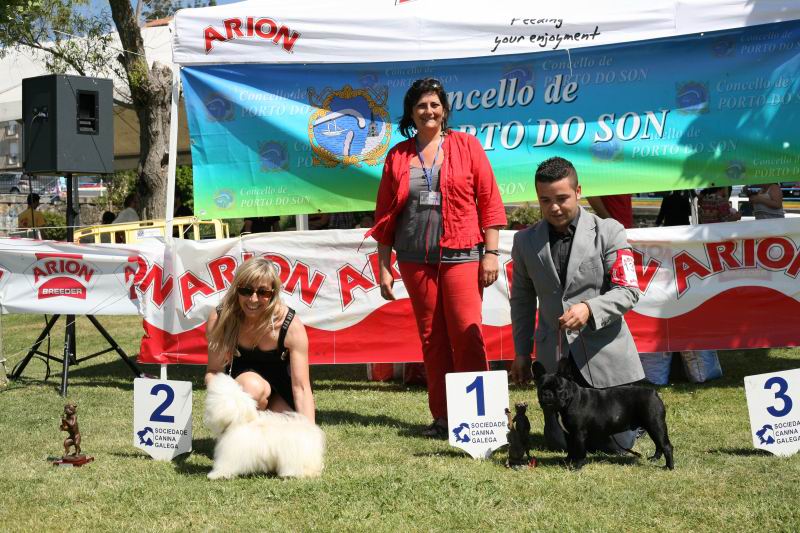
Foto de su mamá, la MultiCampeona, Gran Campeona y Campeona Internacional Pairiwind's Fina Daisy:

La abuela, Campeona de USA, "LELA", una joya de habanera:

martes, 25 de junio de 2013
NUESTRO AMOR DAISY EN LA FINAL DEL GRUPO IX DEL CONSCURSO DE SILLEDA 2013
CONCURSO DE LA "SEMANA VERDE DE GALICIA", CELEBRADO EN SILLEDA, 16 DE JUNIO 2013.
UNA FOTO DE NUESTRO AMORCITO "FINA DAISY" EN LA POSÉ DE LOS FINALISTAS DEL GRUPO IX (nota: Grupo IX son los perros de compañía). UN EXCELENTE 3º PUESTO DE LA FINAL.

UNA FOTO DE NUESTRO AMORCITO "FINA DAISY" EN LA POSÉ DE LOS FINALISTAS DEL GRUPO IX (nota: Grupo IX son los perros de compañía). UN EXCELENTE 3º PUESTO DE LA FINAL.

lunes, 26 de noviembre de 2012
CHAMPION SHOW IN SPAIN 25- NOV. 2012. (TALAVERA DE LA REINA)
AMAZING DANCE BICHONES HABANEROS.
ESTE FIN DE SEMANA TUVO LUGAR LA EXPOSICIÓN DE PUNTO OBLIGATORIO DE ESPAÑA EN TALAVERA DE LA REINA.
"AMAZING DANCE" PARTICIPÓ CON SUS HABANEROS.
1400 KM DE VIAJE Y EL ESFUERZO DE MUCHOS MESES.
LOS RESULTADOS FUERON EXCELENTES Y TODOS LOS OBJETIVOS QUE NOS HABÍAMOS MARCADO LOS CONSEGUIMOS:
ZEUS: EXCELENTE 1º, CAC, CACIB, MEJOR MACHO.
DAISY: EXCELENTE 1º, CAC, CACIB, MEJOR HEMBRA, MEJOR DE RAZA.
HENRY: EXCELENTE 2º (CLASE INTERMEDIA, para menos de 24 meses de edad).
CON ESTOS PUNTOS ZEUS Y DAISY CONSIGUEN EL TÍTULO DE "CAMPEONES DE BELLEZA EN ESPAÑA" (SPAIN CH). ESTE ES SU 5º TÍTULO DE CAMPEONES, 10 TÍTULOS ENTRE AMBOS, EN NUESTRA HUMILDE OPINIÓN SE LO MERECEN POR SU CALIDAD TOP, PUREZA DE RAZA Y SOBRE TODO POR EL ESFUERZO QUE HAN HECHO AGUANTANDO HORAS Y HORAS, HACIENDO MUCHOS KM DE CARRETERA,


ESTAMOS MUY MUY FELICES DE COMPARTIR CON LOS SEGUIDORES DE ESTE BLOG Y CON LOS AMANTES DE LOS HABANEROS ESTE FELIZ ACONTECIMIENTO. GRACIAS NUESTRAS FAMILIAS Y EN ESPECIAL A NUESTRA AMIGA VANESA PROPIETARIA DE LA PELUQUERÍA CANINA "EL PERRO ROSA" EN BOUZAS (VIGO), DE LA QUE HEMOS APRENDIDO Y EN ALGUNOS MOMENTOS DIFÍCILES NOS APOYO CON CORAZÓN Y SINCERIDAD. A TODOS OS RECOMIENDO LLEVÉIS VUESTRO PERRO AL PERRO ROSA, POR SU TRATO CORDIAL, SERVICIO EXCELENTE E INMEJORABLE PRECIO.
UN SALUDO PARA NUESTROS AMIGOS DE CUBA. SIEMPRE ES UNA ALEGRIA SABER QUE UN DESCENDIENTE CON LÍNEA CUBANA, COMO ES ZEUS (VINE DE LÍNEAS CUBANAS COMO SON "OYE CHICO FLOR DE CUBA" Y "DAMI SANZ-PERAZA"), ES RECONOCIDO POR UN JUECES INTERNACIONALES (PORTUGAL, ITALIA, FILANDIA, USA, FRANCIA, INGLATERRA, AUSTRALIA, MALASIA, BÉLGICA, HUNGRIA, POLONIA,... Y POR SUPUESTO ESPAÑA),
UN SALUDO PARA PILAR, MIRIAN Y EL HANDLE AMAURY CON LOS QUE HEMOS COMPARTIDO ESTE ESTUPENDO DÍA DE COMPETICIÓN. Y FELICIDADES PARA ELLAS PORQUE SU ESPECTACULAR CANICHE TOY CONSIGUIÓ EL TÍTULO DE CAMPEÓN DE ESPAÑA, ES CIERTO TIENEN LA SUERTE DE TENER DE LOS MEJORES CANICHES DE ESPAÑA Y ME ATREVO A DECIR EUROPEOS.
ESTAMOS MUY FELICES, UN AÑO DE MUCHO ESFUERZO Y ACOMPAÑADO DE SUERTE. SON YA 12 TÍTULOS DE CAMPEONES DE MORFOLOGÍA Y BELLEZA QUE TIENE NUESTRO CRIADERO DE HABANEROS "AMAZING DANCE", UN RECONOCIMIENTO QUE AGRADECEMOS A TODOS LOS JUECES.
"AMAZING DANCE" PARTICIPÓ CON SUS HABANEROS.
1400 KM DE VIAJE Y EL ESFUERZO DE MUCHOS MESES.
LOS RESULTADOS FUERON EXCELENTES Y TODOS LOS OBJETIVOS QUE NOS HABÍAMOS MARCADO LOS CONSEGUIMOS:
ZEUS: EXCELENTE 1º, CAC, CACIB, MEJOR MACHO.
DAISY: EXCELENTE 1º, CAC, CACIB, MEJOR HEMBRA, MEJOR DE RAZA.
HENRY: EXCELENTE 2º (CLASE INTERMEDIA, para menos de 24 meses de edad).
CON ESTOS PUNTOS ZEUS Y DAISY CONSIGUEN EL TÍTULO DE "CAMPEONES DE BELLEZA EN ESPAÑA" (SPAIN CH). ESTE ES SU 5º TÍTULO DE CAMPEONES, 10 TÍTULOS ENTRE AMBOS, EN NUESTRA HUMILDE OPINIÓN SE LO MERECEN POR SU CALIDAD TOP, PUREZA DE RAZA Y SOBRE TODO POR EL ESFUERZO QUE HAN HECHO AGUANTANDO HORAS Y HORAS, HACIENDO MUCHOS KM DE CARRETERA,


ESTAMOS MUY MUY FELICES DE COMPARTIR CON LOS SEGUIDORES DE ESTE BLOG Y CON LOS AMANTES DE LOS HABANEROS ESTE FELIZ ACONTECIMIENTO. GRACIAS NUESTRAS FAMILIAS Y EN ESPECIAL A NUESTRA AMIGA VANESA PROPIETARIA DE LA PELUQUERÍA CANINA "EL PERRO ROSA" EN BOUZAS (VIGO), DE LA QUE HEMOS APRENDIDO Y EN ALGUNOS MOMENTOS DIFÍCILES NOS APOYO CON CORAZÓN Y SINCERIDAD. A TODOS OS RECOMIENDO LLEVÉIS VUESTRO PERRO AL PERRO ROSA, POR SU TRATO CORDIAL, SERVICIO EXCELENTE E INMEJORABLE PRECIO.
UN SALUDO PARA NUESTROS AMIGOS DE CUBA. SIEMPRE ES UNA ALEGRIA SABER QUE UN DESCENDIENTE CON LÍNEA CUBANA, COMO ES ZEUS (VINE DE LÍNEAS CUBANAS COMO SON "OYE CHICO FLOR DE CUBA" Y "DAMI SANZ-PERAZA"), ES RECONOCIDO POR UN JUECES INTERNACIONALES (PORTUGAL, ITALIA, FILANDIA, USA, FRANCIA, INGLATERRA, AUSTRALIA, MALASIA, BÉLGICA, HUNGRIA, POLONIA,... Y POR SUPUESTO ESPAÑA),
UN SALUDO PARA PILAR, MIRIAN Y EL HANDLE AMAURY CON LOS QUE HEMOS COMPARTIDO ESTE ESTUPENDO DÍA DE COMPETICIÓN. Y FELICIDADES PARA ELLAS PORQUE SU ESPECTACULAR CANICHE TOY CONSIGUIÓ EL TÍTULO DE CAMPEÓN DE ESPAÑA, ES CIERTO TIENEN LA SUERTE DE TENER DE LOS MEJORES CANICHES DE ESPAÑA Y ME ATREVO A DECIR EUROPEOS.
ESTAMOS MUY FELICES, UN AÑO DE MUCHO ESFUERZO Y ACOMPAÑADO DE SUERTE. SON YA 12 TÍTULOS DE CAMPEONES DE MORFOLOGÍA Y BELLEZA QUE TIENE NUESTRO CRIADERO DE HABANEROS "AMAZING DANCE", UN RECONOCIMIENTO QUE AGRADECEMOS A TODOS LOS JUECES.
lunes, 24 de septiembre de 2012
DAISY IS NEW CHAMPION IN GIBRALTAR AND INTERNATIONAL CHAMPION
Nuestra nena Daisy consiguió en la Exposición Internacional 2012 de Gibraltar ser CAMPEONA DE BELLEZA DE GIBRALTAR.
Además con el punto internacional CACIB es CAMPEONA INTERNACIONAL.
Además con el punto internacional CACIB es CAMPEONA INTERNACIONAL.
domingo, 8 de julio de 2012
FINA DAISY Y GUARDIAN ANGEL ZEUS CAMPEONES DE CAMPEONES
ESTE AÑO SE INICIÓ EN PORTUGAL EL CAMPEONATO CANINO PARA CONSEGUIR EL TÍTULO DE "CAMPEÓN DE CAMPEONES" O "GRAN CAMPEÓN".
DAISY Y ZEUS PARTICIPARON ESTE FIN DE SEMANA EN LA 120º EXPOSICIÓN INTERNACIONAL DE LISBOA.
AMBOS CONSIGUIERON SER EXCELENTES 1º OBTENIENDO EL PUNTO CCC-QC QUE LES FALTABA (RECORDAMOS QUE FUERON GANADORES EN LA EXPOSICIÓN QC INTERNACIONAL PORTO ENER0/12, ZEUS FUE EL GANADOR DE LA RAZA LOS DOS DÍAS).
AL TENER 4 CCC + 2 CCC-QC SE PROCLAMANRON"CAMPEONES DE CAMPEONES"
SIENDO DE TODAS LAS RAZAS CANINAS LOS PRIMEROS "GRANDES CAMPEONES" EN PORTUGAL.
FELICIDADES ZEUS Y DAISY HABÉIS HECHO HISTORIA.
PARA EL AÑO PRÓXIMO TENEMOS PLANIFICADO UNOS CACHORROS DE ESTOS NÚMEROS UNO ENTRE LOS NÚMEROS UNO.


DAISY Y ZEUS PARTICIPARON ESTE FIN DE SEMANA EN LA 120º EXPOSICIÓN INTERNACIONAL DE LISBOA.
AMBOS CONSIGUIERON SER EXCELENTES 1º OBTENIENDO EL PUNTO CCC-QC QUE LES FALTABA (RECORDAMOS QUE FUERON GANADORES EN LA EXPOSICIÓN QC INTERNACIONAL PORTO ENER0/12, ZEUS FUE EL GANADOR DE LA RAZA LOS DOS DÍAS).
AL TENER 4 CCC + 2 CCC-QC SE PROCLAMANRON"CAMPEONES DE CAMPEONES"
SIENDO DE TODAS LAS RAZAS CANINAS LOS PRIMEROS "GRANDES CAMPEONES" EN PORTUGAL.
FELICIDADES ZEUS Y DAISY HABÉIS HECHO HISTORIA.
PARA EL AÑO PRÓXIMO TENEMOS PLANIFICADO UNOS CACHORROS DE ESTOS NÚMEROS UNO ENTRE LOS NÚMEROS UNO.


jueves, 19 de abril de 2012
Bichones Habaneros Amazing Dance
BISABUELA DE ZEUS
Hola a todos. Aquí os pongo una fotos de mi origen Cubano, es mi bisabuela Flor de Carbonell. Ella era 100% de origen cubano. Todos me dicen que me parezco mucho a ella y a mi abuela.
Flor es la mama de Bamba, si queréis conocer a Bamba tenéis fotos de ella en mi página (ver menú superior). ¿A qué son casi idénticas?

Hola a todos. Aquí os pongo una fotos de mi origen Cubano, es mi bisabuela Flor de Carbonell. Ella era 100% de origen cubano. Todos me dicen que me parezco mucho a ella y a mi abuela.
Flor es la mama de Bamba, si queréis conocer a Bamba tenéis fotos de ella en mi página (ver menú superior). ¿A qué son casi idénticas?

lunes, 19 de marzo de 2012
HENRY CAMPEÓN JUNIOR 2012 EN PORTUGAL
CAMPEON JUNIOR 2012
NUESTRO PEQUE HABANERO, HENRY, CONSIGUIÓ 1 CCJ-QC Y 4 CCJ EN PORTUGAL Y ES CAMPEÓN.
Y EN LA "1º ESPECIAL DE GRUPO IX" DE CALDAS DE RAIHNA, GANÓ EL MEJOR JOVEN DE RAZA (ENTRE MACHOS Y HEMBRAS JOVENES DE LA MISMA RAZA).
FELICIDADES HENRY!!!!.
viernes, 10 de febrero de 2012
ASÍ SON NUESTROS HABANEROS
Bichn Habanero Amazing Dance. Havanais.
Son unos compañeros muy inteligentes y conversan con usted, son todo entretenimiento, no contestan o discuten, quiere hacer todo lo que quiera hacer, piensan que usted es la persona más grande en todo el mundo, y tienen la voluntad amar a sus hijos mejor de lo que se imagina?......
Consigue un HABANERO!!
Próximos cachorros en camino, mediados de Enero 2018, ya puede reservar.
Ver página de cachorros.
NEXT LITTTER FOR YOU!
---------------------------------------------------------------------------------------------
Vivir con nuestros Habaneros nos trae a diario entretenimiento, alegría y compañía dedicada!.
Su carácter enérgico, vivaz, alegre y amante de la diversión es muy agradable y contagiosa!.
Un Bichón Habanero es un compañero amable, inteligente y miembro de la familia, no sólo un perro.
Son pequeños, pero robustos, y viven de 12-15 años.
No hay que darles de comer dulces, ni chocolate.
No son alergénicos y no ladran!.
Aprenden muy rápido. Son obedientes. Les encanta los niños.
Los Habaneros son muy rápidos y muy atléticos, así que lo hacen muy bien en la agilidad.
Son perfectos tanto para una casa de campo como para vivir en un apartamento. Dales amor, cariño y algunos mimos y se adaptan rápidamente.
Un pequeño perro vigoroso y saludable con un encanto increible!.
Amazing paquetes de amor, baile, alegría y entretenimiento, todo ello envuelto en capas de colores y rostros expresivos!.
SE PUEDE PEDIR MÁS!.

Consigue un HABANERO!!
Próximos cachorros en camino, mediados de Enero 2018, ya puede reservar.
Ver página de cachorros.
NEXT LITTTER FOR YOU!
---------------------------------------------------------------------------------------------
Vivir con nuestros Habaneros nos trae a diario entretenimiento, alegría y compañía dedicada!.
Su carácter enérgico, vivaz, alegre y amante de la diversión es muy agradable y contagiosa!.
Un Bichón Habanero es un compañero amable, inteligente y miembro de la familia, no sólo un perro.
Son pequeños, pero robustos, y viven de 12-15 años.
No hay que darles de comer dulces, ni chocolate.
No son alergénicos y no ladran!.
Aprenden muy rápido. Son obedientes. Les encanta los niños.
Los Habaneros son muy rápidos y muy atléticos, así que lo hacen muy bien en la agilidad.
Son perfectos tanto para una casa de campo como para vivir en un apartamento. Dales amor, cariño y algunos mimos y se adaptan rápidamente.
Un pequeño perro vigoroso y saludable con un encanto increible!.
Amazing paquetes de amor, baile, alegría y entretenimiento, todo ello envuelto en capas de colores y rostros expresivos!.
SE PUEDE PEDIR MÁS!.
